Walk south from Chinatown MRT along Sago Street, and you'll see it before you reach it: a flash of vermillion red and gold rising above the shophouses. The Buddha Tooth Relic Temple doesn't blend in. It's a four-story Tang Dynasty-style Buddhist temple, built in 2007, sitting in the middle of a neighborhood defined by 19th-century shophouses and modern HDB blocks. The contrast is deliberate, and it's photographically rich.
This guide covers the temple's architecture, the best exterior and interior shots, and the practical considerations of photographing an active religious site.
The Architecture: Tang Dynasty in Singapore
The Buddha Tooth Relic Temple was designed in the style of the Tang Dynasty (618–907 CE) — a period considered a golden age of Chinese Buddhist architecture. The temple's design references historical Tang structures, particularly the wooden Buddhist temples of Shanxi province. In Singapore's context, this architectural choice is significant: it's not the Southern Chinese style of most Singapore Chinese temples, but a deliberately Northern, imperial style.
Key architectural features to photograph:
- The vermillion exterior walls: Deep red — the color of Buddhist and imperial Chinese architecture. The walls create a strong color block against the sky and the surrounding shophouses.
- The golden roof with upturned eaves: The temple's roof sweeps upward at the corners, a hallmark of Tang and pre-Tang Chinese architecture. The roof tiles are glazed in a warm ochre-gold that catches afternoon light.
- The pagoda: A four-story structure at the rear of the complex, visible above the main temple roof. The pagoda's stepped silhouette against the sky is one of the temple's most distinctive visual elements.
- Stone lion guardians: Flanking the main entrance, these carved lions are traditional temple guardians. They're worth close-up photography for their detail.
- Wooden doors and lattice windows: The main entrance doors and the windows along the street facade are heavily detailed with traditional Chinese joinery and lattice patterns.
The temple was built using traditional construction techniques where possible, with timber framing and stone foundations. It's one of the few buildings in Singapore that demonstrates pre-modern Chinese architectural methods at this scale.
Exterior Photography
The Street-Level View
The temple faces east onto Sago Street. The best exterior shot is from across the street, where you can capture the full facade — the red walls, the golden roof, the entrance, and the pagoda above. This is a wide-angle composition (24–35mm equivalent) that works best in the morning, when the east-facing facade is lit by direct sun.
However, Sago Street is narrow, and the temple is tall. Getting the full structure in frame requires either a very wide lens or stepping back to the intersection with Temple Street, where the view opens up slightly. From there, a 24mm lens can capture the complete facade including the pagoda top.
The Roof From Above
The most striking exterior photographs of the temple are taken from the upper floors of the surrounding HDB blocks. The Maxwell Chambers and the HDB flats on Smith Street both offer elevated views that show the temple's roof plan — the geometry of the main hall, the pagoda, and the courtyard — in a way that's impossible from street level. These views reveal the temple's layout as a cross-shaped plan with the pagoda at the crossing.
For a legal, accessible elevated view, the public housing corridors on the upper floors of the HDB blocks around Chinatown Complex offer sightlines to the temple roof. These are public spaces, but be mindful that they're also residential corridors — photograph quickly and respectfully.
Detail Shots
The temple's exterior is covered in photographable details. The stone lions, the door hardware, the roof ridge ornaments, the bracket sets under the eaves — each is a legitimate close-up subject. Use a short telephoto (85–105mm) to isolate these details against the red wall or sky. The details are particularly effective when shot in tight composition, as abstract patterns rather than documentary records.
Interior Photography: The Atmosphere
The interior of the Buddha Tooth Relic Temple is where the building's photographic potential fully reveals itself. The main hall — the Hundred Dragons Hall — is a deep, dimly lit space filled with golden Buddhas, red lacquer columns, and intricate ceiling paintings. The light is low, warm, and reverent. It's one of the most atmospherically rich interiors in Singapore.
Photography Rules Inside the Temple
Photography is permitted in most areas of the temple, but with restrictions. No flash, no tripods, and no photography in the relic chamber on the fourth floor (where the sacred tooth relic is housed). Some areas may restrict photography during prayer times. Always check posted signs and ask temple staff if you're unsure. Cover your shoulders and knees — this is a place of worship.
The Hundred Dragons Hall (Main Hall)
The main prayer hall is a long space with a large golden Buddha at the far end, flanked by rows of smaller Buddha statues. The perspective of the columns leading toward the main Buddha creates a natural one-point perspective composition. Shoot from the entrance, down the center axis, with a normal or slightly wide lens (35–50mm equivalent).
The light here is mixed: warm artificial lighting on the Buddha statues, cooler light from the entrance, and the ambient glow of incense. ISO 1600–3200 is necessary for hand-held shooting. Embrace the low light — the dimness is part of the atmosphere. Overexposing to brighten the hall destroys the mood that makes the space photographically interesting.
The Mezzanine Level
One floor up from the main hall, a mezzanine gallery looks down into the Hundred Dragons Hall. This elevated angle gives you a different composition — looking down at the hall's layout, the Buddha statues, and the people praying below. The railing creates a natural foreground element, and the downward angle emphasizes the hall's depth.
The Roof Garden
The temple's roof — accessible via stairs inside the building — contains a small garden with a pagoda, a bell, and a drum. This is one of Singapore's most surprising quiet spaces: a rooftop garden above the bustle of Chinatown, with the temple's golden roof tiles visible up close and the city skyline beyond. The contrast between the traditional temple roof and the modern CBD towers behind it is a quintessential Singapore juxtaposition.
Timing and Light
The temple is open daily from 7:00 AM to 7:00 PM. For exterior photography, morning light (7:00–9:00 AM) is best — the east-facing facade is directly lit, the red walls glow, and the streets are relatively quiet. Afternoon light (4:00–6:00 PM) rakes across the facade from the west, creating dramatic shadows on the roof details and the street-facing walls.
For interior photography, the time of day matters less — the interior lighting is consistent throughout the day. However, weekday mornings are the quietest time, giving you more space and fewer people in your frames. Weekends and festival days are busier but offer the opportunity to photograph the temple in active use — incense, prayers, and community gatherings.
Photographing Religious Spaces: A Note on Respect
The Buddha Tooth Relic Temple is an active place of worship. Monks live there. Devotees pray there daily. When you photograph, you are documenting someone else's spiritual practice, not a museum exhibit.
Practical guidelines:
- Walk slowly and quietly. The temple is a place of contemplation.
- Don't photograph people praying without their implicit consent. If someone is deep in prayer, don't put a camera in their face. Photograph the space, not the worshipper.
- Don't touch the Buddha statues or religious objects.
- Follow the dress code: covered shoulders and knees. The temple provides shawls if you're underdressed.
- If a ceremony is in progress, step back. You're welcome to observe, but don't disrupt.
Context: The Temple in Chinatown
The Buddha Tooth Relic Temple sits at the heart of Chinatown, surrounded by the restored shophouses that define the district. After photographing the temple, walk the surrounding streets — Sago Street, Smith Street, Temple Street — for a complete picture of the neighborhood. The Maxwell Food Centre is two blocks away and makes an excellent lunch stop.
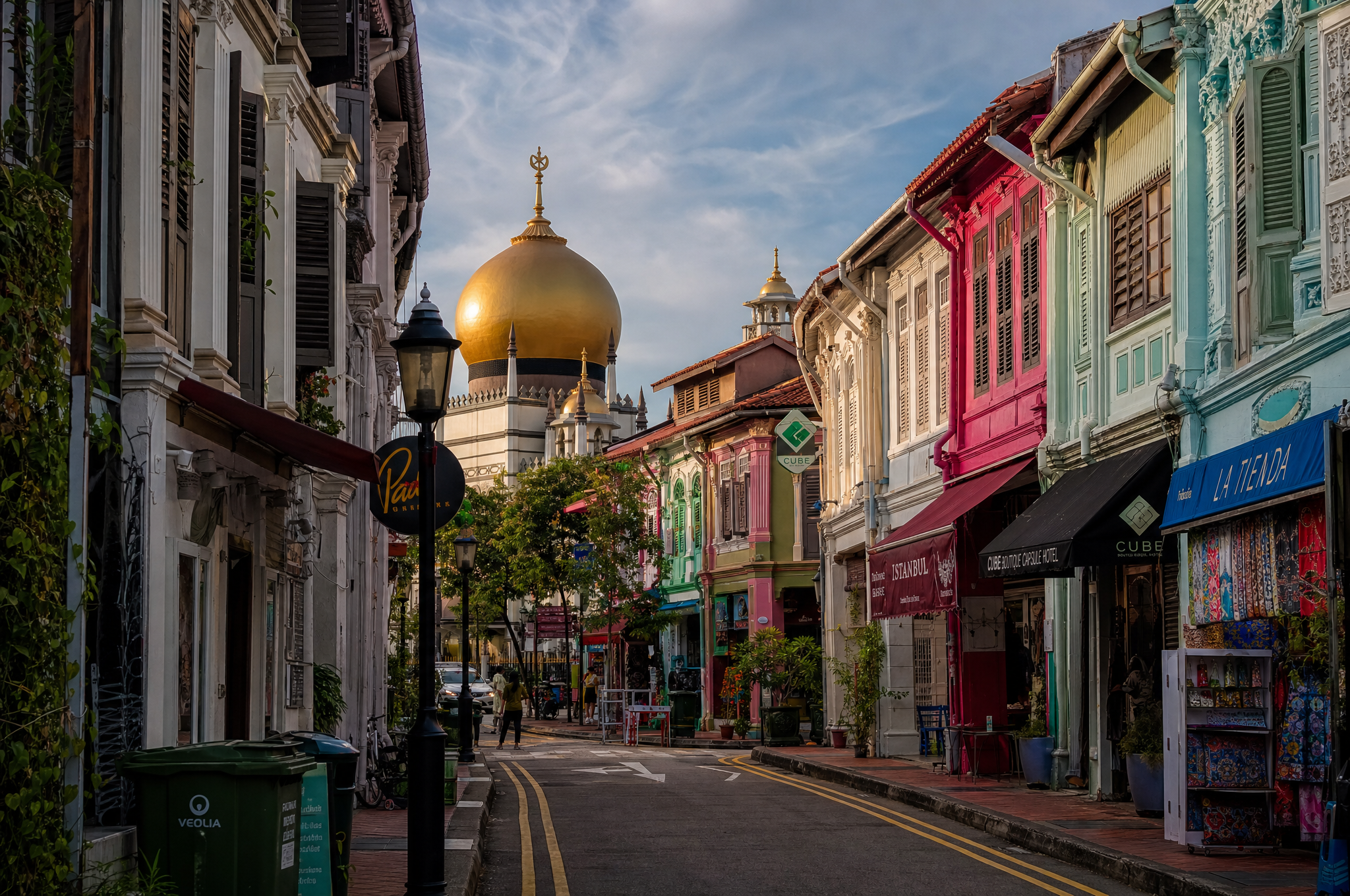
For a broader exploration of Singapore's religious architecture, the Sultan Mosque in Kampong Glam offers an instructive contrast: a different religious tradition, a different architectural language, but the same principle of a landmark religious building anchoring a cultural district.
And if you're interested in the other end of Singapore's architectural spectrum — colonial-era rather than religious — see our guide to the colonial black-and-white houses that represent Singapore's British colonial architectural heritage.